Features
Inside Japan’s Animal Cafe Culture

Walking through any major Japanese city, you’ll pass them every so often, owl cafes, kitten cafes, hedgehog cafes, snake cafes. Neon signs promise encounters with capybaras, meerkats, foxes, and otters. It’s sensory overload for any animal lover, and on my recent trip to Japan, I couldn’t resist diving in. What I found was a mix of tenderness, cute appeal and some questions.

The first animal cafe wasn’t actually Japanese, it was a cat cafe that opened in Taiwan in 1998. But a Japanese tourist visited, recognised the potential, and brought the concept back to Osaka in 2004. From there, it exploded. By 2016, Japan had over 430 animal cafe facilities, and that number has only grown since.
In Japan most apartment buildings forbid pets, which means millions of animal lovers have no way to keep companions at home. Add to that Japan’s well-documented issues with loneliness and social isolation (particularly among young professionals working punishing hours) and suddenly these cafes make perfect sense. They offer iyashi (healing) to customers through animal interaction, a brief escape from urban stress without the long-term commitment of pet ownership. There is also an element of the sensory moment, giving you a much need ‘brain break’, it’s placing you somewhere where you are focused on the activity at hand, in that moment.
There’s also the kawaii factor, Japan’s cultural obsession with cuteness. From Hello Kitty to viral pet videos, adorable animals are woven into the national aesthetic. Pet cafes tap directly into this affection, offering Instagram-ready experiences with creatures specifically chosen for their charm.
My Micro Pig Experience
Of all the animal cafes I visited, the pig cafe was the most memorable, and the most surprisingly intimate. Mipig, Japan’s first micro pig cafe chain, opened in 2019 after a successful crowdfunding campaign that raised double its target.
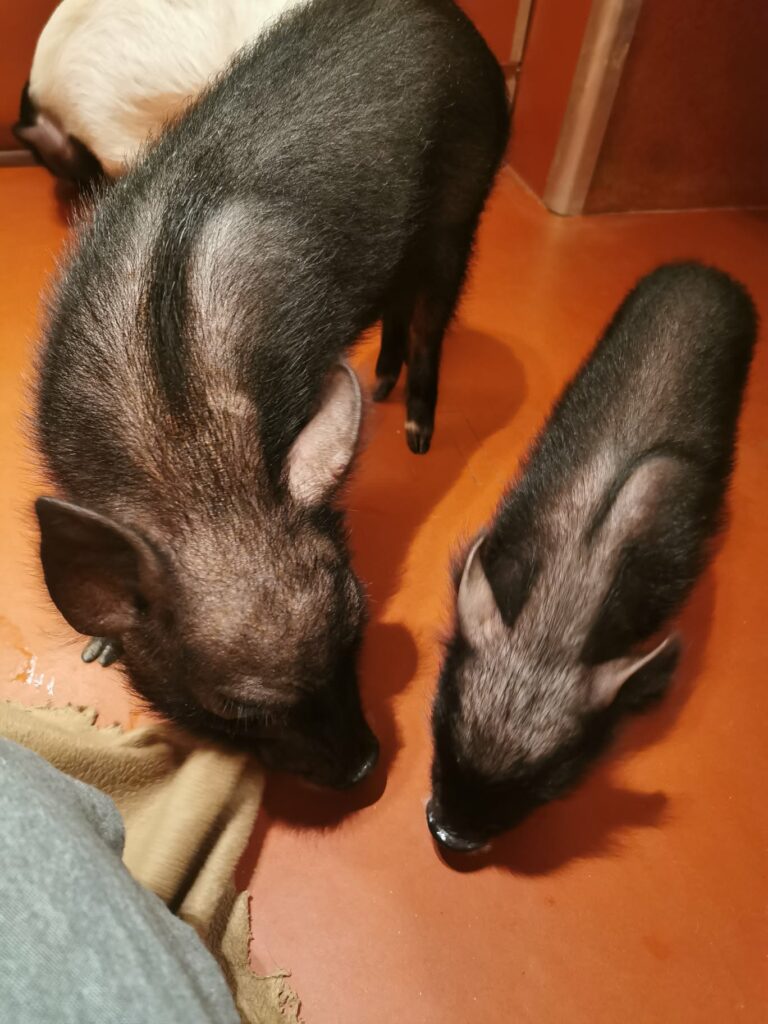
When you arrive, you’re shown to your own private room with a small group of pigs. The staff hand you a blanket to drape over your lap and special shoe covers, the pigs, I quickly learned, have a habit of nipping at feet. Nothing can quite prepare you for what happens next.
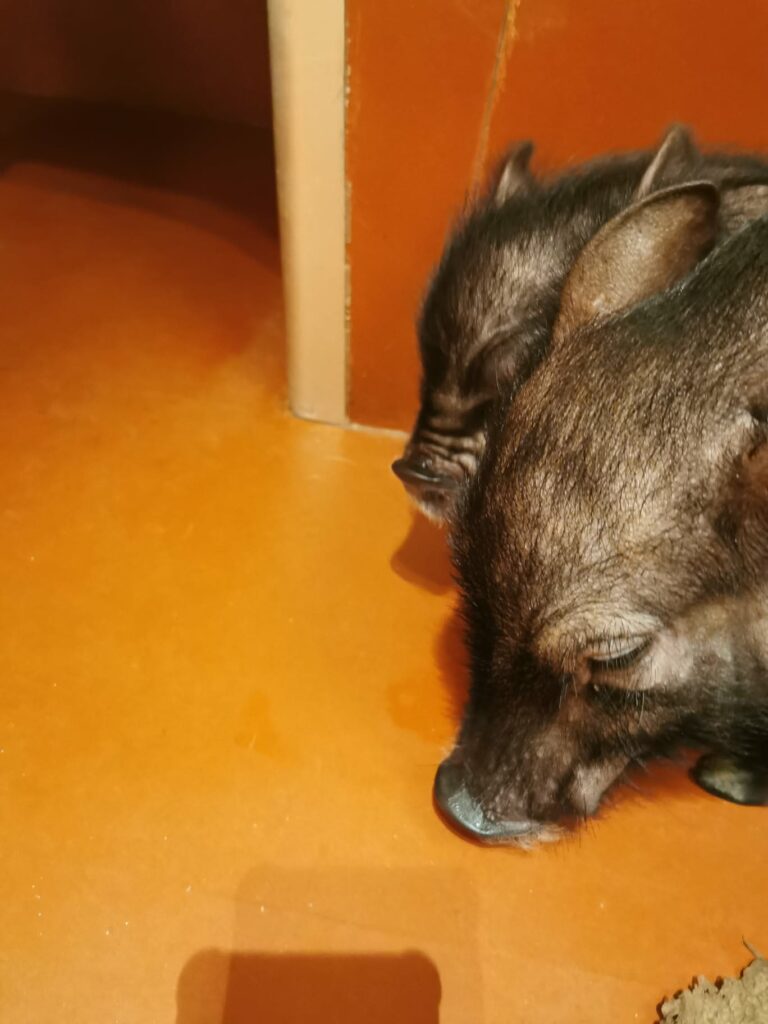
The pigs are curious. Intensely curious. They want to sniff every inch of you, rooting around with their snouts. At first, it’s a bit overwhelming, these aren’t the docile lap pets you might expect. And if you try to gently move one away from nibbling at your toes? The squeal. I genuinely wasn’t prepared for how loud a small pig can be when mildly inconvenienced.
Once they’ve determined you have no more carrots to offer (you’re given a small supply to distribute), they settle. And when a micro pig decides it wants to curl up on your lap for a nap, there’s a surprising tenderness to it. They snuggle in, warm and heavy, and you find yourself sitting very still, not wanting to disturb them. It’s genuinely sweet and an experience unlike anything I’ve had with animals before (apart from my cat.. he loves to snuggle too).
The Dog Cafe
Dog cafes are a different beast entirely, literally a free-for-all. You enter a room full of various breeds, many of them small and dressed in frilly outfits (a very Japanese touch), and chaos ensues. Dogs run everywhere, customers compete for attention, and you quickly realise the transactional nature of the whole thing: these dogs are primarily interested in you if you have treats. No treats? They’re off to find someone more useful.
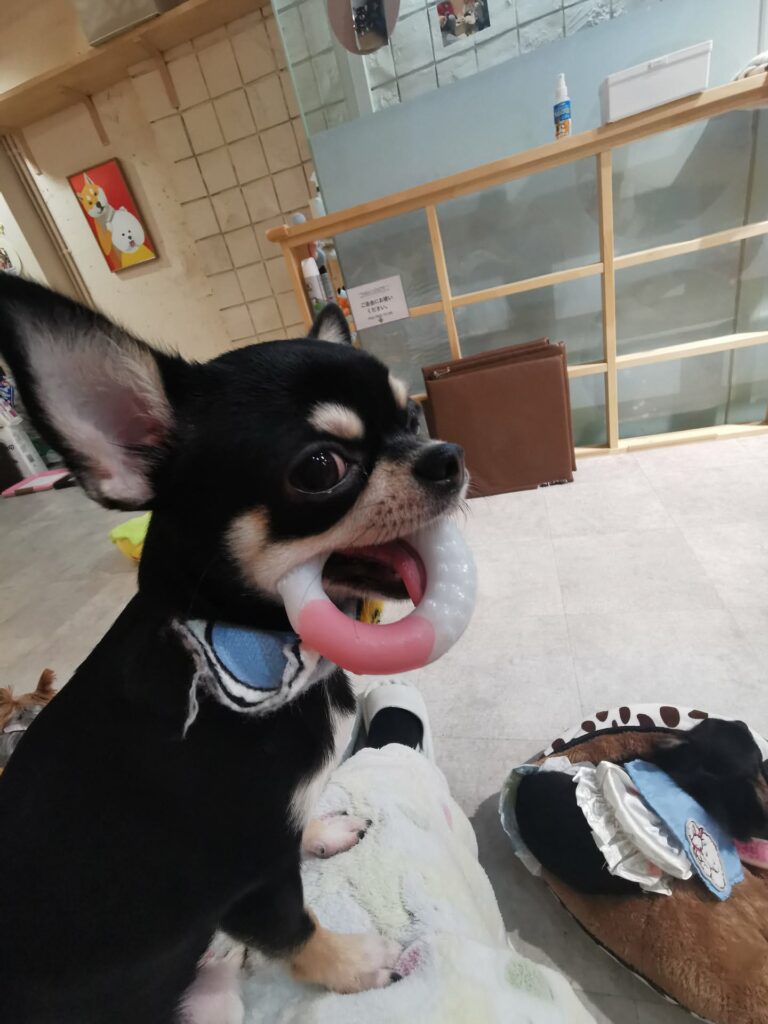
You also need to watch where you step. Unlike the relatively contained pig experience, dog cafes have accidents happening throughout the space. Staff do their best to clean up, but it’s part of the deal.
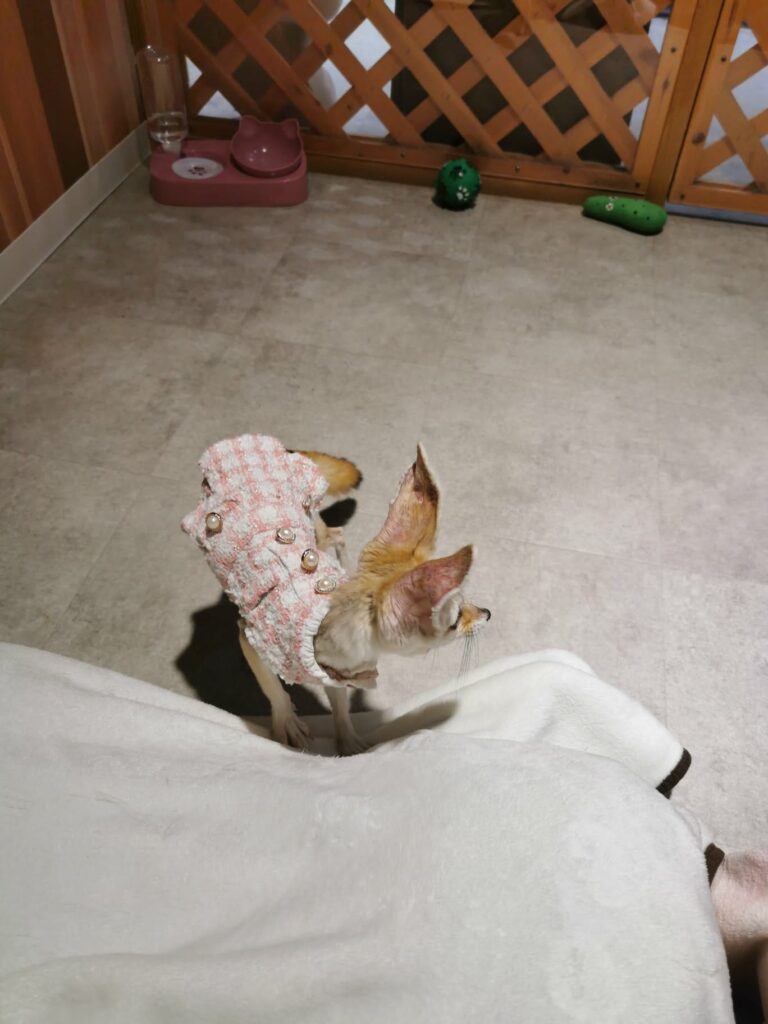
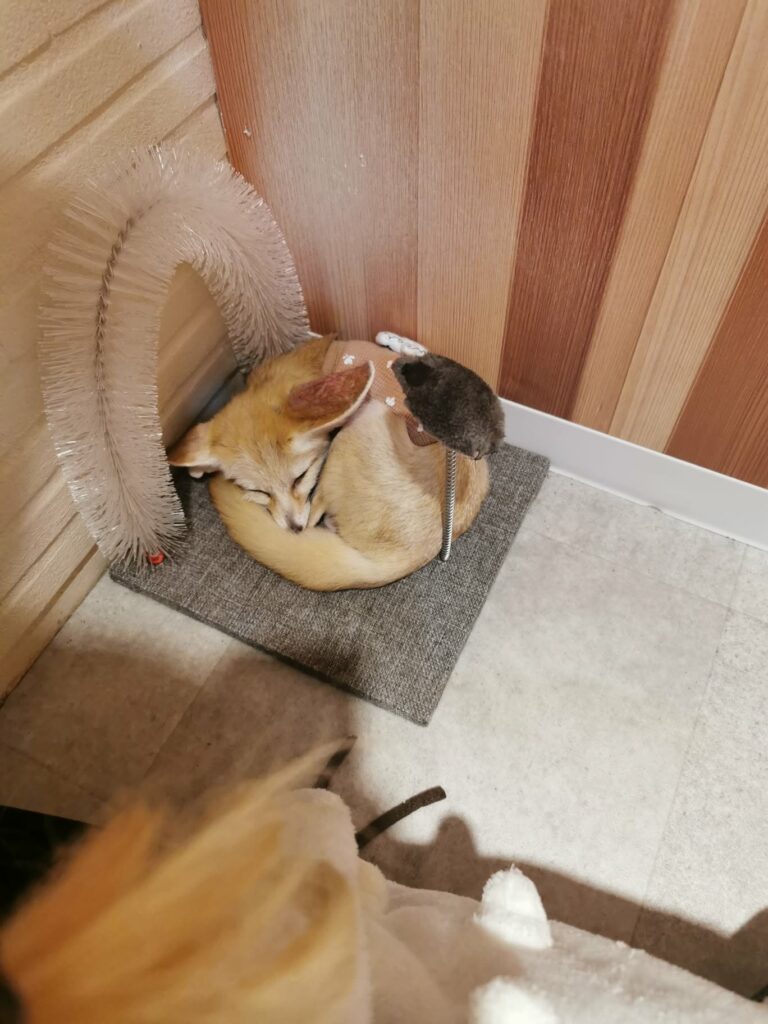
One cafe I visited also had foxes, actual foxes, dressed in the same frilly outfits as the dogs. They were beautiful animals, but something about seeing a wild creature in a bow felt uncomfortable. Foxes aren’t domestic animals; they haven’t been selectively bred for generations to live alongside humans the way dogs have.
And then there was what I glimpsed out the back: cages, stacked high. It was just a flash as a door opened, but it lodged in my mind. Where do these dogs go at night? Do they sleep in those cages? Do they ever get walked outside? I genuinely hope so, though I have no way of knowing. At one point during my trip, I did see a man walking about thirty dogs simultaneously through Tokyo, so someone is taking them out. Whether that’s adequate exercise for animals used as entertainment all day is another question.
We passed a kitten cafe and an owl cafe, but both were closed when we tried to visit. Part of me was disappointed; part of me was relieved. Owl cafes in particular have drawn significant criticism, owls are nocturnal predators being forced into brightly lit rooms to be handled by strangers for hours. It’s a far cry from their natural behaviour.
We’d also heard rumours of otter cafes in both Kyoto and Osaka where you can interact with otters. There are also otter experiences at various animal cafes in Tokyo, including the Harry chain in Asakusa. But otter cafes come with their own serious concerns. Research has found that many otters in Japanese cafes were not captive-bred but taken from the wild, their families often killed so poachers could snatch the babies. Some arrive with missing teeth, deliberately removed to make them safer to handle.
On one hand, the pig experience was genuinely lovely, the animals seemed healthy and well-cared for, the staff attentive, the pigs themselves choosing who to interact with rather than being forced into laps. Mipig claims to regulate how long each pig spends with visitors and rotates them to prevent stress.
Animal welfare advocates point out that cafes tend to be tiny and don’t provide enough of a natural environment, that animals kept in such settings experience stress from constant human contact, that the whole industry can fuel demand for exotic pets taken from the wild. The Japanese government has passed stricter animal protection laws in response to these concerns, but enforcement varies. Some cafes clearly prioritise animal welfare; others seem to view their animals primarily as money-makers. As a visitor, it’s genuinely hard to tell the difference from the outside.
If you’re planning to visit animal cafes in Japan, here’s my honest advice, do your research beforehand. Look for places that work with rescue animals or facilitate adoptions. Check reviews, and specifically look at the one-star reviews, not just the glowing ones. Pay attention to how the animals behave: are they choosing to interact, or being forced into contact? Do they have space to retreat if they want to?
Cat and dog cafes that partner with shelters and support adoption offer a model where animals can genuinely benefit from the attention. Some pig cafes, including Mipig, seem to take welfare seriously.
I’m glad I went. I’m glad I had that moment with the pig. But I’m also glad I’m asking these questions, because the animals can’t ask them for themselves.