Features
Minecraft 1.21.11 – Spears, Undead Riders & Ocean Beasts

A new era of mounts, weapons, and mayhem hits Minecraft as Mojang drops its latest update, bringing a wave of undead cavalry, deep-sea creatures, and a brand new weapon.
With 1.21.11, Mojang has introduced the Mounts of Mayhem update. New mobs, weapons, mechanics, and world behaviour. Following earlier 2025 drops, this update shifts the spotlight onto traversal and combat, giving players more ways to move and fight. We took a deep dive into every confirmed feature to break down exactly what’s arriving in this chaotic new chapter.
What Is Mounts of Mayhem?
Mounts of Mayhem is the fourth Minecraft game update of 2025, following The Spring to Life (25 March 2025), Chase the Skies (17 June 2025), The Copper Age (30 September 2025).
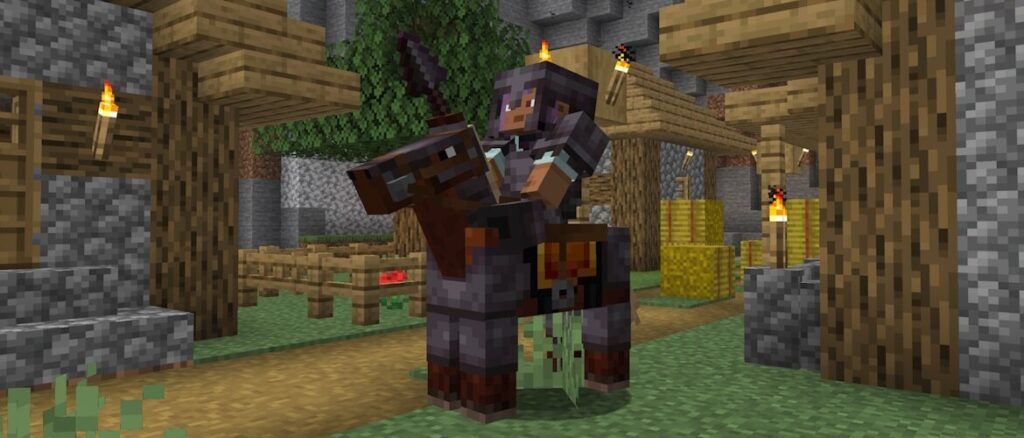
This drop focuses entirely on mounts, riders, and mobility upgrades. It introduces new creatures across multiple biomes. It finally adds a way to get the classic zombie horse in survival, a brand-new weapon class, and refreshes how players navigate land and sea. Everything is designed around dynamic movement. There’s jousting with spears, diving into oceans on undead nautili, or thundering through deserts beside skeletal raiders.
The Spear: Minecraft’s New Combat Style
Minecraft gets a new weapon: the spear, available in all main material tiers.
- Works with two attack modes: Jab for fast melee, and Charge for mounted or sprinting attacks.
- Introduces a fresh combat rhythm focused on spacing and momentum.
- Paired with a new enchantment, Lunge, which adds mobility at the cost of hunger.
Undead Riders of the Desert
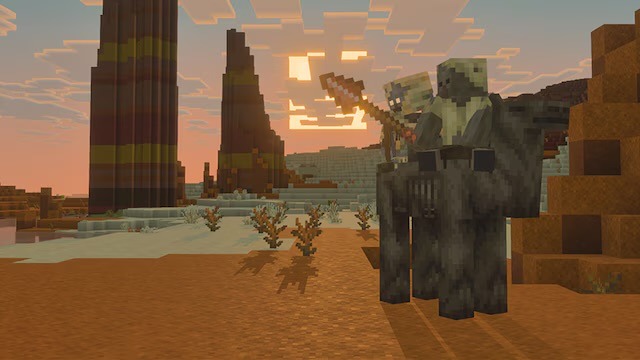
Camel Husks
A new undead camel-like mount found in deserts and badlands.
- Typically spawns with a rider.
- Can be tamed once the rider is dealt with.
- Behaves like other undead mobs (Smite-vulnerable, burns in sunlight on land).
Parched
A new skeleton variant for hot biomes.
- Uses a bow that inflicts Weakness.
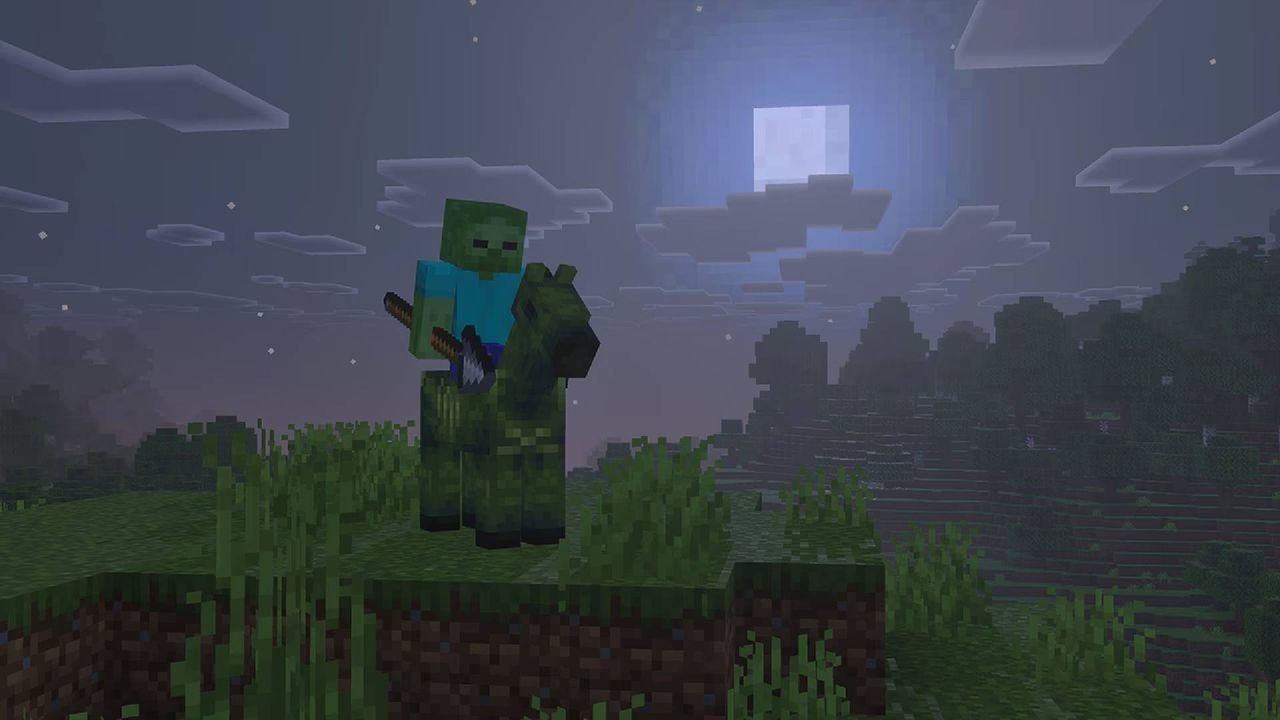
- Often rides camel husks alongside spear-wielding husks.
- Does not burn in daylight.
The Nautilus Rises
Nautilus
A brand-new aquatic mount found in deep oceans.
- Tamed with pufferfish, then mountable with a saddle.
Grants the Breath of the Nautilus effect, freezing the oxygen bar so players do not drown while riding. - Attracts drowned naturally.
Zombie Nautilus & Coral Zombie Nautilus
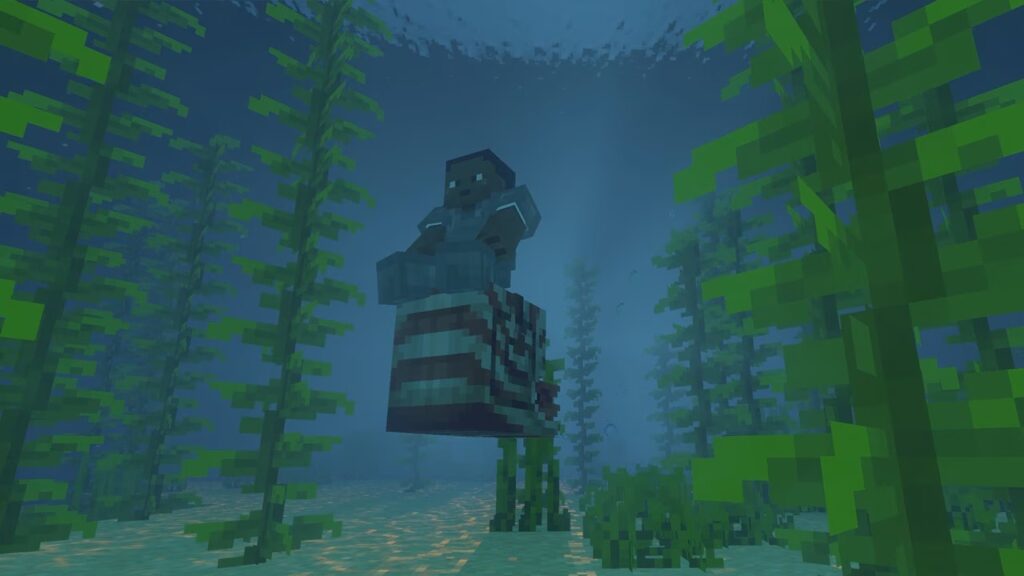
Undead variants appearing in regular and warm oceans.
- Can spawn with drowned jockeys riding them.
- Tamable once the rider dismounts.
- Behave as undead: burn in sunlight on land, react to Smite, etc.
Zombie Horses Return From the Dead
Long requested and now fully supported:
- Zombie horses spawn naturally in plains and savanna as part of new rider encounters.
- Can be tamed after unseating the rider.
- Can wear all tiers of horse armor, including the new netherite variant.
- Count as undead and burn in sunlight.
Mount Armor Overhaul
Two major additions expand mount customisation:
- Nautilus Armor – copper, iron, gold, diamond, and netherite variants.
- Netherite Horse Armor – now craftable via a smithing upgrade, making it the strongest armor for horses and zombie horses.
How Gameplay Will Change
Mounts of Mayhem provides a lot of different ways to move around in the game.
- Spears transform both foot combat and mounted combat.
- Horses can now swim, making rivers and lakes far easier to cross.
- Underwater travel with mounts thanks to the nautilus family.
- Desert biomes become more dangerous with parched riders and undead cavalry.
- A lot of new ‘jocky’s’ were added giving mob collection players additions for their zoo’s.
Full Feature Breakdown
New Weapon
- Spear (all tiers)
- Lunge enchantment (3 levels)
New Mounts & Mobs
- Nautilus
- Zombie Nautilus
- Coral Zombie Nautilus
- Camel Husk
- Parched
- Zombie Horse (expanded features & natural spawns)
New Effects
- Breath of the Nautilus
Mount Armor
- Nautilus armour (copper → netherite)
Netherite horse armour (craftable)
Major Mechanics
- Horses can swim
New jockey encounters across deserts and oceans - Undead mob rules applied consistently to new mounts
Technical Additions
- Updated data pack version
- Updated resource pack version
- Item component updates
- Item tag updates
- Entity texture updates
- Entity model updates
- Bug fixes and behaviour tweaks
Final Thoughts
This drop adds a fair amount of new features, mobs and mechanics. There are more ways to traverse terrain now, along with mob-collecting opportunities and interaction for players (jousting.) Ever since the announcement that Mojang was releasing drops instead of slower updates, a lot has been added into the game.
Features
Wuthering Heights Movie Review: Emerald Fennell’s Raunchy Adaptation Has Us Questioning Everything

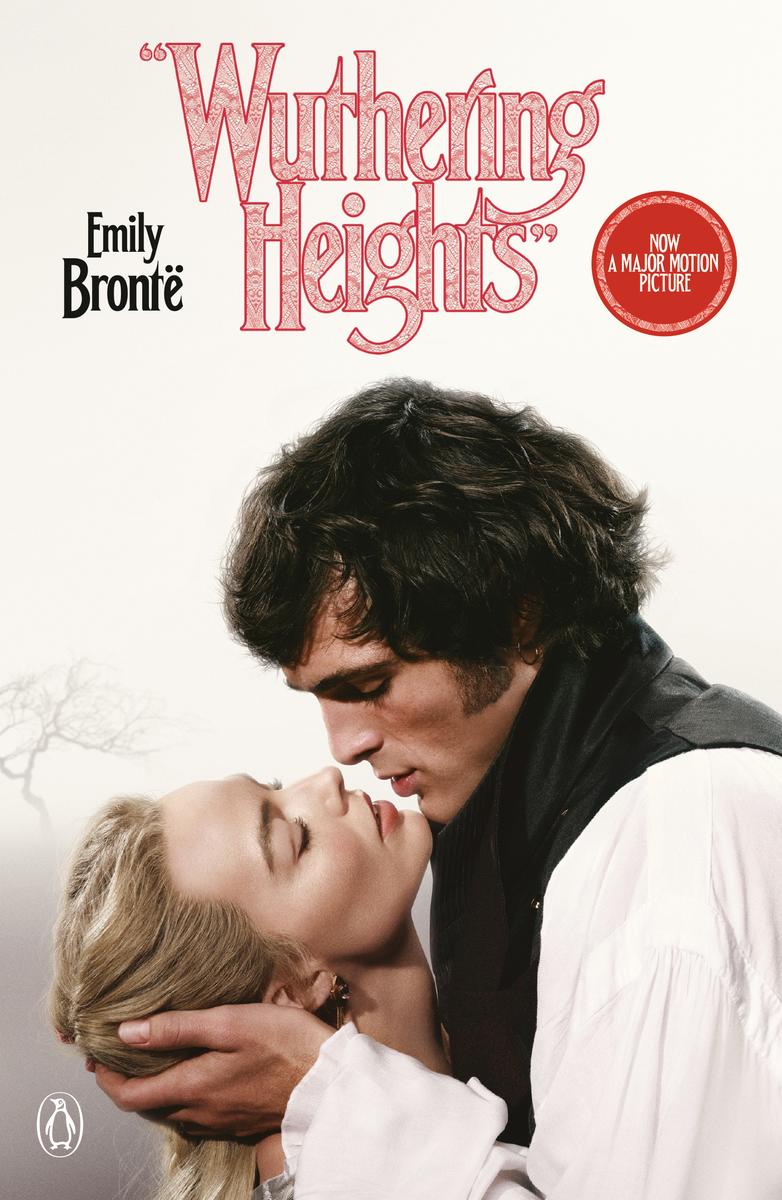
Right, let’s talk about Emerald Fennell’s new Wuthering Heights movie, because I need to process it!
If you remember what Fennell did with Saltburn (and that bathtub scene that lived rent free in everyone’s head for months), you already know this woman doesn’t do subtle. This film has moved away from the feral, emotionally violent spirit of Emily Brontë’s novel and instead embraced a sleek, showy, visually stunning but arguably more surface level aesthetic. Critics have noted the film feels “glossy” and “polite” compared to the novel, which is powered by spite, obsession, cruelty, and class rage. BUT even with that polished sheen, it still achieves exactly what it needs to. The emotion lands. The passion hits. The heartbreak sticks with you. Forget windswept moors and soggy period drama vibes.
If you’re going into this expecting tender longing glances across misty landscapes, think again. This adaptation goes hard. We’re talking unfiltered passion that makes you sit back and genuinely reassess your own love life. Jacob Elordi as Heathcliff is something else entirely. The man went from playing the Creature in Frankenstein to whatever this is, and let’s just say the intensity levels are through the roof. “Raunchy” doesn’t even begin to cover it. Opposite him, Margot Robbie as Catherine brings a ferocity, and these two together on screen? Absolute chaos in the best possible way. Hong Chau as Nelly is a standout, with Shazad Latif, Alison Oliver, and Martin Clunes rounding things out.
And visually? This film is a feast. The costume design alone deserves its own conversation. Margot Robbie reportedly had 50 costumes. The Christmas scenes in particular are stunning, all rich textures and layered elegance that make you want to pause and just stare at the screen. Then there’s the wallpaper at Thrushcross Grange, which almost seems to glow, lit up like fireflies are trapped behind the surface. And the fireplace seemingly made of hands?
Now, fair warning if you haven’t read the original novel: there are some serious twists coming your way. I won’t spoil them here, but buckle in because the story takes turns that’ll properly knock you sideways. From what we’ve heard, the books go into considerably more detail (as they always do), and the film has been adapted for screen in a way that trims and reshapes the source material.
As someone who hasn’t read the book, I can tell you this film stands completely on its own. It’s powerful. It’s the kind of movie that burrows into your head and stays there. You’ll feel things you weren’t expecting to feel. Anger, heartbreak, desire, confusion about why you’re suddenly crying into your popcorn.
The film dropped on February 13, 2026 (the day before Valentine’s Day), and it’s already pulled in $159 million in global ticket sales. It’s sparked a full blown wave of “Brontemania,” with tourism to the Brontë Parsonage Museum in Haworth surging since release. If you’ve ever wanted to trudge across the real moors that inspired the original story, now’s the time.
If you want a film that actually makes you feel something real, properly feel it in your chest, go watch this. It’s not comfortable. It’s not neat. But it’s unforgettable. Fennell has taken a 177 year old story and made it feel modern.
Rating: A must watch for anyone who wants cinema that punches you in the heart.
Features
The Fan Theories That Haunted Stranger Things — And The One That Refused To Die
Now that the credits have rolled on Hawkins for the final time, we can finally look back at the wild ride…
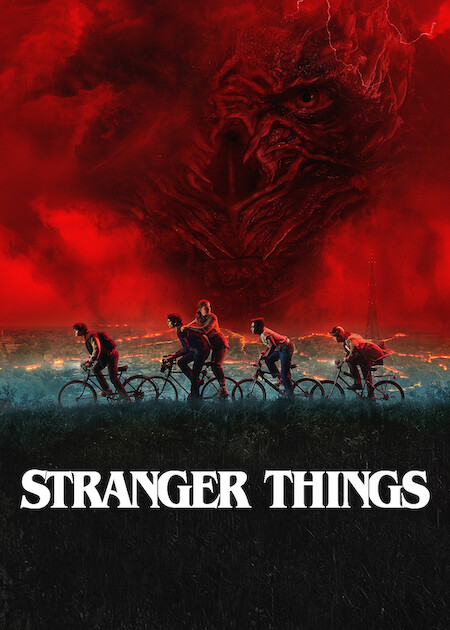
Now that the credits have rolled on Hawkins for the final time, we can finally look back at the wild ride of speculation that consumed the fandom for nearly a decade. Some theories proved eerily accurate. Others were gloriously wrong. And one refused to accept that the story was actually over.
Conformity Gate: The Theory That Broke The Internet
Let’s address the elephant in the Upside Down first. Within hours of the finale airing on New Year’s Eve, a conspiracy theory swept across TikTok and Reddit that had fans convinced Netflix was hiding a secret ninth episode.
Dubbed “Conformity Gate,” believers argued that everything we saw in the finale was actually one last Vecna illusion. The evidence? Students at the graduation ceremony allegedly mirrored Henry’s posture. Cassette tapes behind Robin supposedly spelled out Morse code reading “U did not stop me.” Max graduating despite being in a coma for two years. The list went on.
Fans became so convinced that January 7th would bring a surprise drop that they crashed Netflix waiting for it. The streaming giant eventually responded by updating Stranger Things’ social media bios to read: “ALL EPISODES OF STRANGER THINGS ARE NOW PLAYING.”
Documentary director Martina Radwan called the theory “wishful thinking” when asked directly. Sometimes, the ending really is the ending, even if part of you wants one more trip to Hawkins.
The Theories That Actually Landed
Will’s Connection Would Be Central
Fans spent years theorising that Will Byers’ bond with the Upside Down would prove crucial in the final battle. They were right. His emerging abilities and connection to Vecna became a significant plot point, with Will able to siphon power from the villain himself.
Kali Would Return
After her controversial Season 2 appearance, many assumed we’d seen the last of Eleven’s “lost sister.” But theories persisted that she’d return for the endgame and return she did, found imprisoned by the military in the Upside Down. Her illusion powers became essential to the final plan, and depending on whether you believe Mike’s D&D epilogue, potentially helped Eleven escape.
The Mind Flayer As The True Threat
A persistent theory suggested Vecna was merely a pawn and the Mind Flayer was the real big bad all along. Season 5 complicated this by revealing the creatures originated from “Dimension X” rather than the Upside Down itself, with the Upside Down being a wormhole connecting our world to this nightmare dimension.
Eleven Would Sacrifice Herself
The most popular pre-finale theory was that Eleven would die to end the cycle. In a sense, this came true; she appeared to die, destroying the Upside Down. But the Duffer Brothers left things deliberately ambiguous, with Mike’s final D&D narration suggesting Kali may have helped her escape through illusion. “We don’t know,” Mike tells the party. “Not for sure. But I choose to believe.”
The Theories That Missed The Mark
The Vecna Redemption Arc
Many fans predicted Henry Creel would switch sides and help defeat the Mind Flayer in a redemption arc. Instead, Joyce Byers took an axe to his head with the words “You fucked with the wrong family.” No redemption. Just decapitation.
It Was All A D&D Game
A theory that persisted from the early seasons suggested the entire show would be revealed as one elaborate game in the Wheeler basement. While the finale bookended beautifully with D&D, starting and ending the series in that same basement, the events were very much real.
Major Party Deaths
Despite years of predictions that Will, Steve, or another core party member would die, nearly everyone survived. The Duffer Brothers opted for emotional weight over body count, with Kali being the most significant death. Steve Harrington, who many assumed was marked for a heroic sacrifice, made it out alive.
The Psychiatric Ward Theory
One of the wilder theories suggested all the characters were actually patients in a psychiatric facility, with the Upside Down being a shared delusion. This was always a reach, and thankfully the Duffers didn’t go anywhere near it.
What The Finale Actually Gave Us
The finale delivered answers fans had waited nearly a decade for. The Upside Down was revealed as a wormhole connecting our world to Dimension X — the true home of the Mind Flayer and Demogorgons. Eleven created this bridge when she made contact with the dimension as a child.
The ending brought closure while leaving room for imagination. An 18-month time jump showed Max and Lucas together, Dustin heading to university while staying close to Steve, Will finding acceptance in New York, and Hopper proposing to Joyce before they moved to Montauk. As for Eleven? That depends on what you choose to believe.
The Theories Live On
Even now, with Netflix confirming there’s no secret episode and the One Last Adventure documentary offering behind-the-scenes closure, some fans remain convinced there’s more to uncover. That’s the nature of a show that built mystery into its DNA.
The upcoming animated series Stranger Things: Tales of ’85 and a still-mysterious live-action spinoff promise to answer lingering questions about Henry Creel’s origins and Dimension X. So while the main story has ended, the theorising hasn’t stopped.
It never really does, does it?
Features
The Real Secrets of Studio Ghibli: Facts, Welsh Mining Towns, and the Magic of “Ma”
If you’ve ever felt that particular ache in your chest while watching Totoro wait at the bus stop…

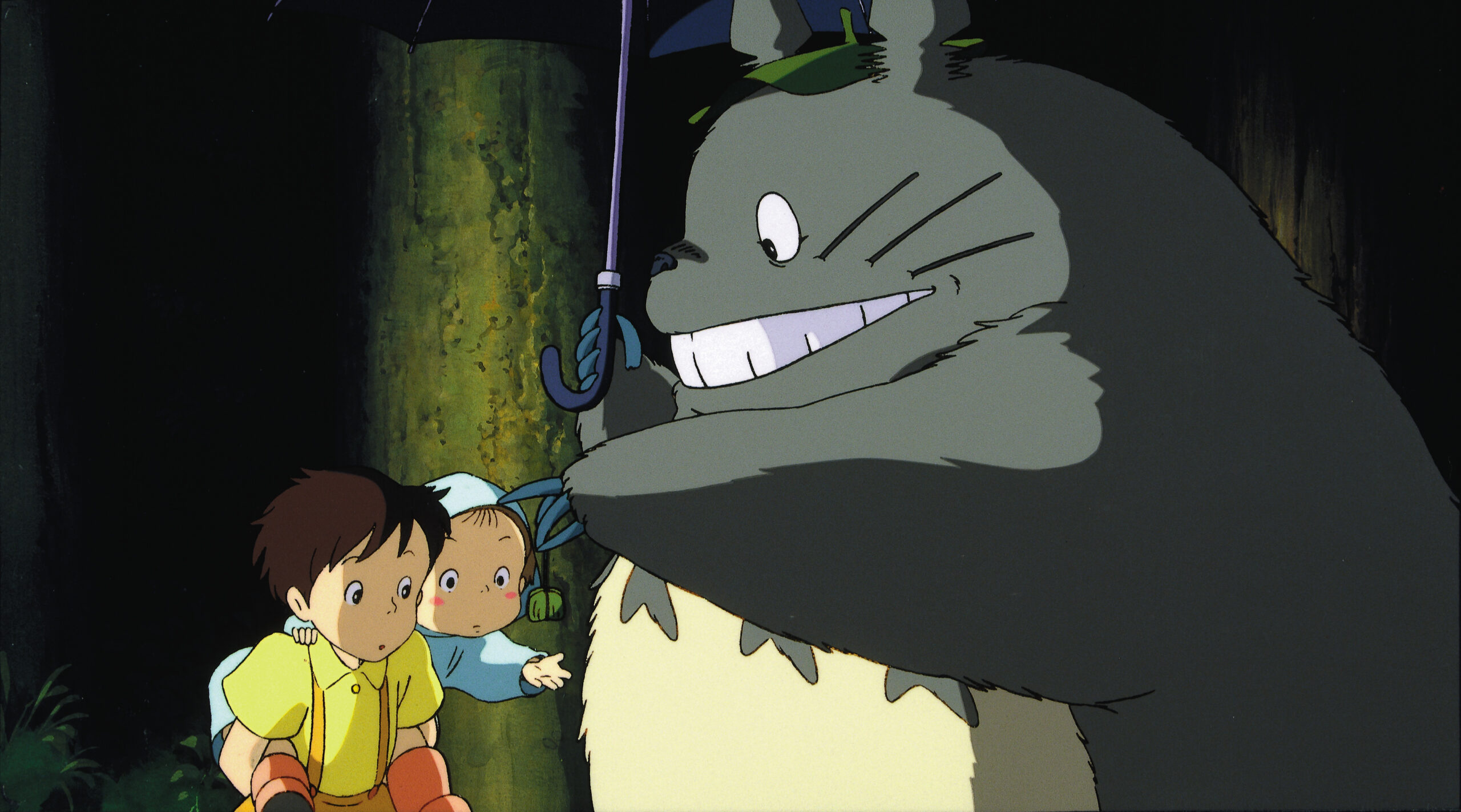
If you’ve ever felt that particular ache in your chest while watching Totoro wait at the bus stop, or found yourself unconsciously holding your breath during Chihiro’s train ride across the flooded tracks, then you already understand what makes Studio Ghibli different.
The internet is awash with possible “secrets” about these films: hidden death gods, mysterious frequencies, impossible numerical patterns. But in this article, we will take a look at some of the interesting facts.
The Studio’s Origins: Hot Desert Winds and Two Horse Power
Before Studio Ghibli existed, Miyazaki ran a personal office called “Nibariki,” meaning “Two Horse Power,” a nickname for the Citroën 2CV he drove. In April 1984, he and Isao Takahata created this studio to handle copyright for their work.
But when founding their animation studio in 1985, they chose a different name entirely. “Ghibli” comes from the Italian noun for a hot Saharan wind, which was also the nickname for Italy’s Caproni Ca.309 reconnaissance plane. Miyazaki, whose love of aviation runs through nearly every film he’s made, chose the name deliberately. He wanted the studio to “blow a new wind through the anime industry.”
Easter Egg Watch: That Caproni connection wasn’t forgotten. Decades later, Giovanni Caproni himself appears as a character in The Wind Rises, inspiring the protagonist in his dreams. If you watch that film, pay attention to the dream sequences. Miyazaki had been carrying that seed for thirty years, and you can trace his aviation obsession all the way back to the studio’s name.
The Unfinished Script: How Ghibli Films Actually Get Made
Miyazaki’s films don’t have scripts.
“I don’t have the story finished and ready when we start work on a film,” Miyazaki told Midnight Eye in 2002. “I usually don’t have the time. So the story develops when I start drawing storyboards. The production starts very soon thereafter, while the storyboards are still developing. We never know where the story will go but we just keep working on the film as it develops.”
Spirited Away, the most successful film in Japanese history until 2020, winner of the Academy Award for Best Animated Feature, was created without anyone knowing how it would end until they were already deep into production.
“It’s not me who makes the film,” Miyazaki has said. “The film makes itself and I have no choice but to follow.”
Isao Takahata worked completely differently. While Miyazaki dove in and discovered his stories, Takahata would spend years in preparation. The Tale of Princess Kaguya took eight years to complete. These opposing methods, one intuitive and improvisational, the other meticulous and deliberate, somehow both produced masterpieces under the same roof.
The Welsh Connection: Where Castle in the Sky Really Came From
Here’s something you won’t find in most Ghibli retrospectives: Miyazaki visited Wales twice, and both trips fundamentally shaped Castle in the Sky.
His first visit came in 1984, during the miners’ strike itself. While Isao Takahata and Toshio Suzuki stayed behind in Japan setting up what would become Studio Ghibli, Miyazaki travelled 5,914 miles to the Rhondda valleys in South Wales. He arrived while communities were in the thick of their year-long battle against pit closures, watching families band together against Margaret Thatcher’s Conservative government.
What did he actually do there? He drew. Wikipedia confirms he spent his time “drawing the mining villages and communities of Rhondda.” He sketched the terraced houses clinging to hillsides. He observed the medieval castles, particularly Caerphilly, Caernarfon, and Powis Castle, which would later inspire Laputa’s design. The garden terraces of Powis Castle are particularly visible in the floating island’s architecture if you know where to look.
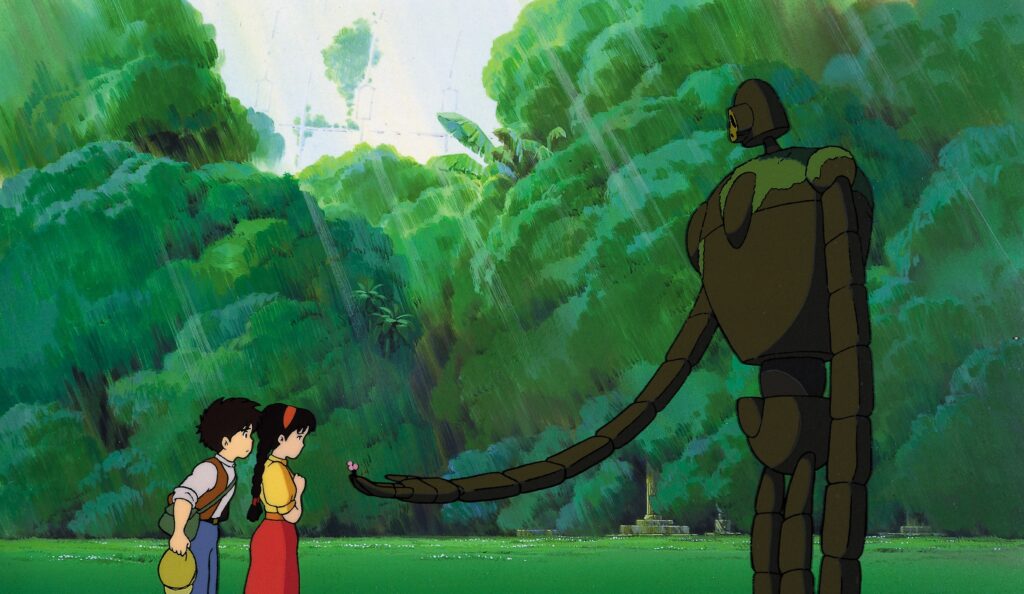
He returned in May 1985 specifically to research the film, this time with production already underway. By then, the strike had ended in defeat. The miners had marched back to work on 3 March 1985, banners still held high, but everyone knew the industry was dying. Miyazaki witnessed both the fight and its aftermath.
“I was in Wales just after the miners’ strike,” he told The Guardian in 2005. “I really admired the way the miners’ unions fought to the very end for their jobs and communities, and I wanted to reflect the strength of those communities in my film. I admired those men, I admired the way they battled to save their way of life, just as the coal miners in Japan did. Many people of my generation see the miners as a symbol; a dying breed of fighting men. Now they are gone.”
That last line hits differently when you know the context. Miyazaki was thinking of the Miike coal mine strikes in Japan during the early 1960s, another labour battle crushed by government intervention. He saw the same story playing out across two countries, two cultures, two communities being systematically dismantled.
Easter Egg Watch: You can see Wales everywhere in Castle in the Sky. Pazu’s village, nestled in mountains with traditional terrace houses, could be lifted directly from the Rhondda. Next time you watch the opening scenes, look at the architecture. Those narrow streets, the way the buildings stack up the hillsides, the intimate community where everyone knows each other. That’s not generic fantasy design. That’s what Miyazaki sketched in his notebooks while walking through Welsh mining towns.
No photographs from these trips have surfaced publicly, despite extensive archival searches. If you know of any, get in touch. The visual record of Miyazaki’s time in Wales exists only in his sketches, which became the film’s design foundation. Those drawings are the reason a Japanese animated film looks so authentically like the South Wales valleys.
The mining community that bands together to protect Pazu and Sheeta echoes the real solidarity Miyazaki witnessed. The landscape, with its intimate connection between people and the earth, reflects what Welsh poet G. Jones described as Wales’ meaning being found “in some corner of a field, a pool under a rock, in a bare sheep walk or cottage folded in a gully.”
The Welsh Connection, Part Two: Howl’s Moving Castle
Wales stayed with Miyazaki. Nearly two decades after those trips to the Rhondda, he returned to Welsh source material for Howl’s Moving Castle.
The 2004 film is based on the 1986 novel by Diana Wynne Jones, a British author who was raised in Wales during the Second World War. Her book follows a Welsh wizard whose real name is Howell Jenkins, a man who travels between magical realms and modern day Wales, at one point returning to visit a house in Swansea.
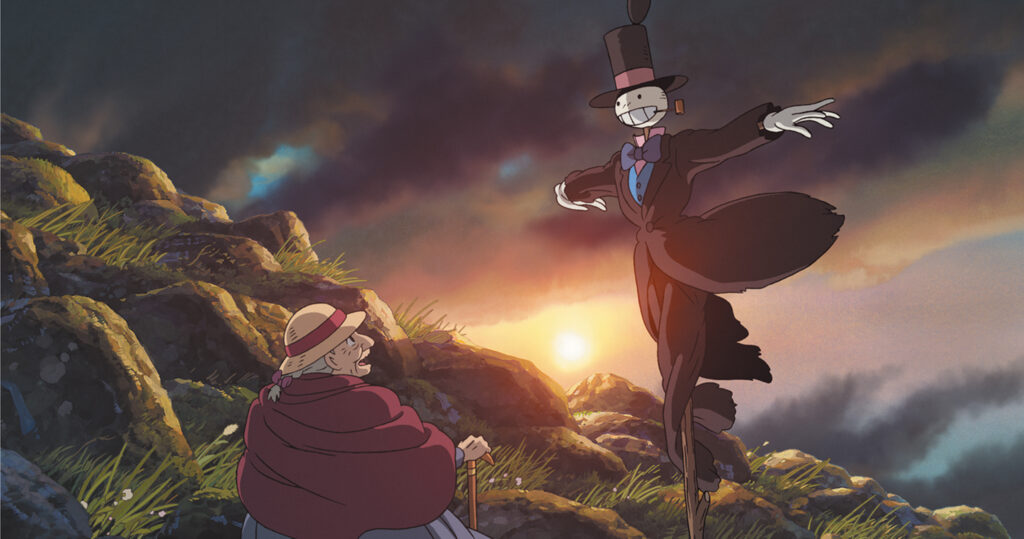
Miyazaki’s adaptation lifts the story into an imaginary European landscape, but the Welsh bones remain visible. The rolling green hills, the quaint villages, the sense of a world caught between old magic and encroaching modernity. And if you watch the English language version, listen carefully: Howl briefly speaks Welsh, one of the few instances of the language appearing in anime.
Jones’ novel and Miyazaki’s film share something beyond geography. Both are interested in identity and transformation, in people who wear different faces in different worlds. Howl literally has multiple names and appearances. Sophie ages and de-ages throughout the story. It’s fitting that this shape-shifting tale originated with a writer who grew up navigating between Welsh and English cultures during wartime.
The River That Became a Spirit
One of the most memorable scenes in Spirited Away features a “stink spirit” arriving at the bathhouse, a creature so foul that everyone recoils. Chihiro discovers a bicycle handle protruding from its side, and after an enormous effort to pull it out, reveals that the creature is actually a polluted river god, poisoned by human garbage.
This came directly from Miyazaki’s life. “I cleaned a river once,” he explained in the Japanese Press Notes for Spirited Away. “My local river. And there really was a bicycle. It was stuck in there. Ten of us wrapped a rope around the bars and slowly pulled it out. We really cleaned up the river, and the fish are back. And that’s why I added that scene.”
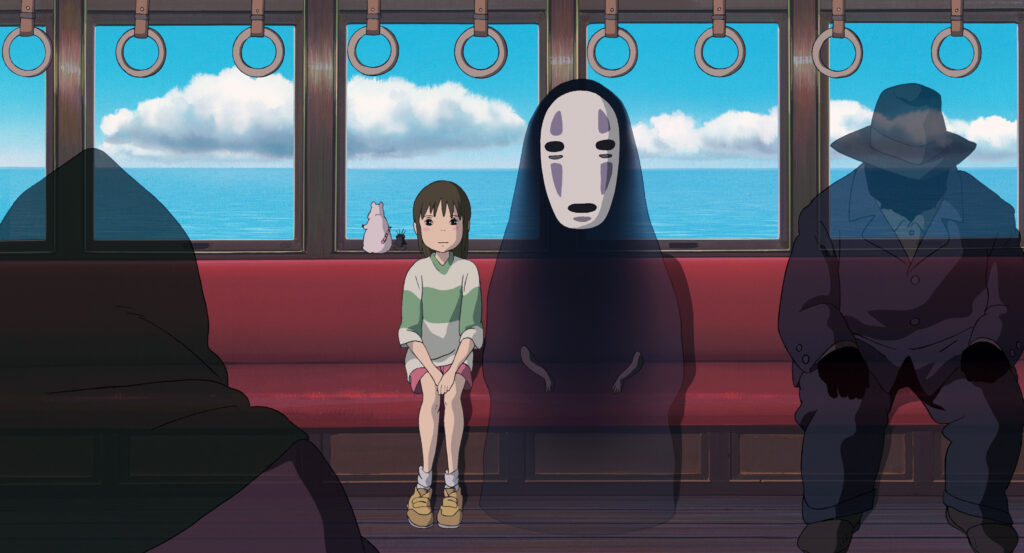
This is what makes Ghibli films resonate so deeply. They’re not assembled from marketing data or focus grouped into existence. They emerge from real experiences, real observations, real emotions. When you watch that scene, you’re watching something that actually happened to someone who cared enough to put it on screen.
The Double Feature That Changed Everything
Here’s a piece of genuine Ghibli history that sounds made up: when My Neighbor Totoro premiered in Japanese theatres in 1988, it was shown as a double feature with Grave of the Fireflies.
One film is a warm, gentle story about childhood wonder and forest spirits. The other is one of the most devastating depictions of war’s impact on children ever committed to film. Miyazaki’s celebration of innocence followed by Takahata’s unflinching portrayal of its destruction.
The intent was deliberate. After experiencing the horrors of Grave of the Fireflies, audiences would be taken out of that darkness and into a world of healing with Totoro. The two films were designed to work together: devastation followed by restoration, grief followed by wonder.
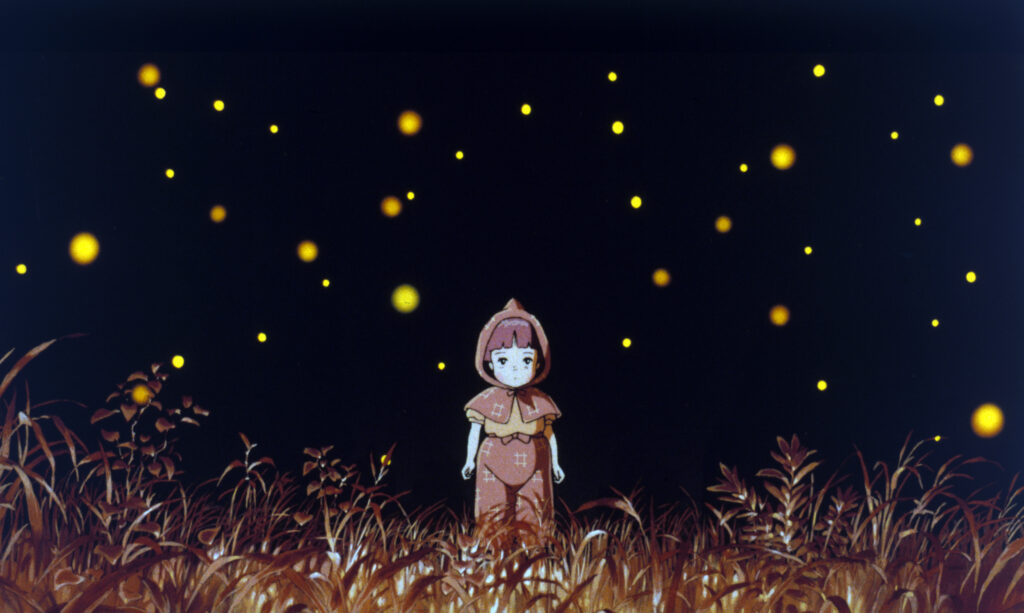
Neither film was a major box office success at the time. Totoro received critical acclaim but only modest ticket sales. It wasn’t until Studio Ghibli approved merchandising rights in 1990 that Totoro became the cultural phenomenon we know today. The merchandise profits were eventually enough to sustain the entire studio.
The Cat Who Stopped Talking
In Kiki’s Delivery Service, there’s a moment that troubles many viewers: Kiki loses her ability to understand her cat Jiji, and unlike her flying powers, this ability never returns. In the Japanese version, anyway. The Disney dub added a line suggesting she could understand him again.
Miyazaki made this choice deliberately. “Jiji represents the childish side of Kiki,” he explained in the film’s production notes, “and the reason why she loses her ability to communicate with him is because she has grown up.”
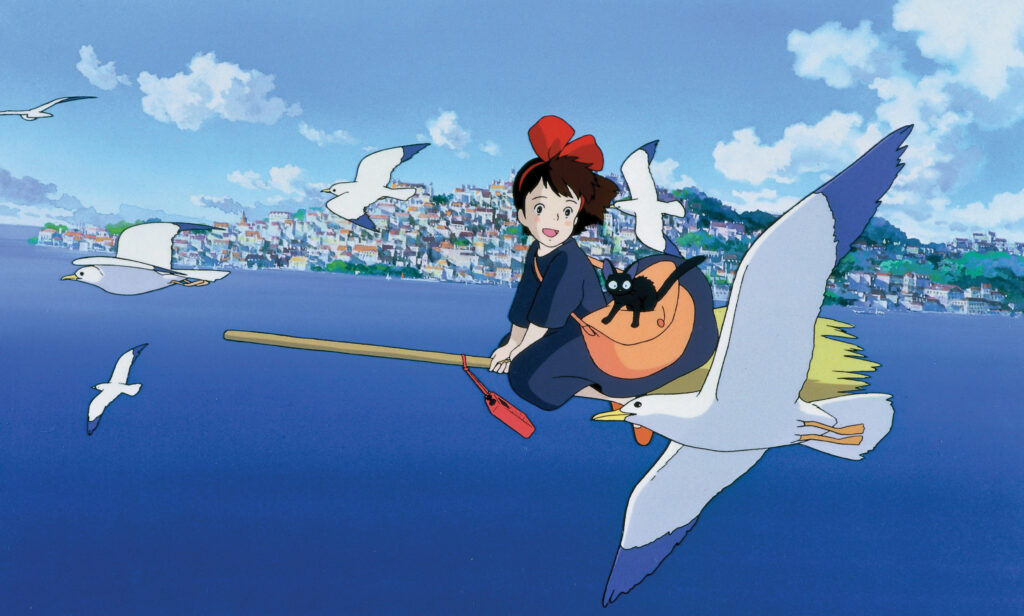
It’s not a curse or a tragedy. It’s part of becoming an adult. Kiki starts her journey surrounded by familiar things: her father’s radio, her mother’s broom, her childhood companion who speaks her language. One by one, she loses these connections. The radio plays foreign stations. She breaks the broom. Jiji no longer speaks to her.
But look at what she gains: her own broom (well, a deck brush), her own friends, her own place in the world. She and Jiji remain close. The credits show them flying together with his kittens. Their relationship has matured into something new. This isn’t loss. It’s growth.
The Curse That Isn’t Magic
Porco Rosso never explains how its protagonist became a pig. There’s no wicked sorcerer, no enchanted object, no spell to break. A man simply woke up one day transformed.
According to Studio Ghibli’s press materials, Marco “was disillusioned with humanity, and cursed himself to be a pig.” Miyazaki put it more bluntly: “When a man becomes middle aged, he becomes a pig.”
The film shows us what happened. During the Great War, Marco survived a battle that killed everyone around him, including his best friend, who had just married the woman Marco loved. He saw the spirits of dead pilots rising into the clouds, but he remained behind, alive.
His transformation isn’t magic. It’s shame. It’s survivor’s guilt made visible. He sees himself as unworthy of humanity, so his outside reflects what he believes his inside to be. The film’s ending is deliberately ambiguous. We never clearly see whether Marco becomes human again. Because that’s not really the point. The question isn’t whether the curse breaks. The question is whether Marco can forgive himself.
The Spaces Between
Miyazaki’s films contain something he calls “ma,” and the bus stop scene in My Neighbor Totoro is perhaps its purest expression.
You know the scene. Satsuki and Mei are waiting in the rain for their father’s bus. Mei has fallen asleep on her sister’s back. The night is getting darker. Vehicles pass, but none of them carry their father. The girls are worried about their mother in hospital. They’re worried their father won’t come. They’re confronting, in their quiet way, the possibility of being left alone.

The scene runs for nearly seven minutes. In a film that’s only 86 minutes long, that’s a significant commitment to watching two children wait for a bus. Almost nothing happens. A toad croaks in the mud. Rain drums on the umbrella. Satsuki shifts her weight. The tension builds not through action but through its absence.
Then Totoro appears.
Satsuki notices an enormous paw beside her. She looks up. There he is, standing at the bus stop as though this were the most natural thing in the world, wearing only a leaf on his head against the rain. She offers him her father’s umbrella. He accepts it. The first raindrop hits the umbrella and Totoro’s eyes widen with delight. More drops fall. He discovers he loves the sound. He jumps, and the trees shake loose a thunderclap of water. He grins that enormous grin.
This is what Miyazaki means by “ma.” In his interview with Roger Ebert, he clapped his hands three or four times to demonstrate. “The time in between my clapping is ma. If you just have non-stop action with no breathing space at all, it’s just busyness. But if you take a moment, then the tension building in the film can grow into a wider dimension. If you just have constant tension at 80 degrees all the time you just get numb.”
The bus stop scene works because of everything that comes before the magic. Seven minutes of worry, of rain, of waiting. The mundane made transcendent precisely because we earned it. When the Catbus finally arrives, its twelve legs churning through the night, it doesn’t feel like a deus ex machina. It feels like a reward for patience.
Film School Rejects noted that when they screened Totoro to an audience including small children who couldn’t read the subtitles, the kids sat in total silence for 86 minutes. “Not a peep or a fidget, just silent sets of wide eyes fixed firmly on the screen.” That’s ma in action. Children don’t need constant stimulation. They need space to feel.
This is why Ghibli films feel different from typical animation. They trust their audience. They understand that sometimes the most powerful storytelling happens in silence, in the space between events, in the quiet moments that let you bring your own emotions to the screen.
What the Debunked Theories Tell Us
The internet is full of “dark” theories about Studio Ghibli films. Totoro is supposedly a death god. The children in My Neighbor Totoro are supposedly dead. Seita’s ghost supposedly appears throughout Grave of the Fireflies.
Studio Ghibli has explicitly denied these theories. “Everyone, please put your minds at ease,” the studio stated. “The rumors of Totoro being a death god, Mei being dead, and other rumors of the like are absolutely not true. Someone made them up because they sounded interesting to him or her, and it seems to have spread around the Internet.”
Producer Toshio Suzuki addressed the claim that Satsuki and Mei don’t have shadows in the final scene: “It was merely decided that it wasn’t necessary to draw when producing the animation.”
But these theories persist because these films mean so much to people. You want there to be hidden depths, secret layers, mysteries to uncover. You want your beloved films to contain more than you initially saw.
The truth is, they do. Just not in the ways the theories suggest. The depths are in Miyazaki’s memories of his mother’s illness (which inspired Totoro‘s hospitalised mother). They’re in Takahata’s meticulous historical research. They’re in the real Welsh mining villages and cleaned-up rivers and childhood experiences that became animated masterpieces.
The Real Magic
There’s no hidden frequency making you cry. No secret numerical pattern connecting the films. No conspiracy waiting to be uncovered.
What there is, is this: a studio that was founded to “blow a new wind” through animation, led by artists who worked without scripts because they trusted their instincts, who based their fantasy worlds on real places they’d visited and real rivers they’d cleaned, who understood that growing up means losing some things while gaining others, who knew that sometimes the most powerful moments in a film are the quiet ones where nothing seems to happen.
The real secret of Studio Ghibli isn’t hidden in freeze frames or background details or numerical patterns. It’s right there on the surface, in every carefully drawn frame: these films were made by people who genuinely cared about what they were making.
That’s why they hurt so much to finish. Because something real was put into them. And something real comes back out.

Austin Wintory and Troy Baker Live at Game Music Festival 2026

Black Myth Zhong Kui: Everything We Know So Far

Wuthering Heights Movie Review: Emerald Fennell’s Raunchy Adaptation Has Us Questioning Everything

Dungeons & Dragons Fan Expo London 2026: Cast, Dates & Tickets

Masters of the Universe Movie 2026: Cast, Plot and Everything We Know

Toy Story 5 Trailer: Woody Returns to Fight Tech

AnimeJapan 2026 Expands With 50 Stages, 120 Companies

Everything We Know About Minecraft’s First Update of 2026
Dungeons & Dragons Fan Expo London 2026: Cast, Dates & Tickets
Masters of the Universe Movie 2026: Cast, Plot and Everything We Know
Black Myth Zhong Kui: Everything We Know So Far
Wuthering Heights Movie Review: Emerald Fennell’s Raunchy Adaptation Has Us Questioning Everything
Toy Story 5 Trailer: Woody Returns to Fight Tech
Austin Wintory and Troy Baker Live at Game Music Festival 2026
-

 Events2 months ago
UK & Ireland Comic Cons 2026: Your Complete Convention Calendar
-

 Games3 months ago
The Boys VR Game Announced: Trigger Warning Hits Quest & PSVR 2 in 2026
-

 News3 months ago
Beast Games Returns: Strong vs Smart for $5 Million
-
 Christmas3 months ago
Love Actually – 15 Hidden Details and Easter Eggs
-
 Games3 months ago
Rune Factory: Guardians of Azuma Brings Its Village-Building Magic to PS5 and Xbox
-
 Games2 months ago
Vernearth Review: Slipknot’s Minecraft Server Is Weird and Metal
-
 News3 months ago
Fallout Season 2: December Release Date, New Vegas Setting Revealed
-

 Features3 months ago
Inside Japan’s Animal Cafe Culture